

-
×
 THOMSON (40PATH7777) MOTHERBOARD
1 × ₹3,000.00
THOMSON (40PATH7777) MOTHERBOARD
1 × ₹3,000.00 -
×
 SAMSUNG (40" UA40M5000AR) MOTHERBOARD
1 × ₹3,000.00
SAMSUNG (40" UA40M5000AR) MOTHERBOARD
1 × ₹3,000.00
Subtotal: ₹6,000.00
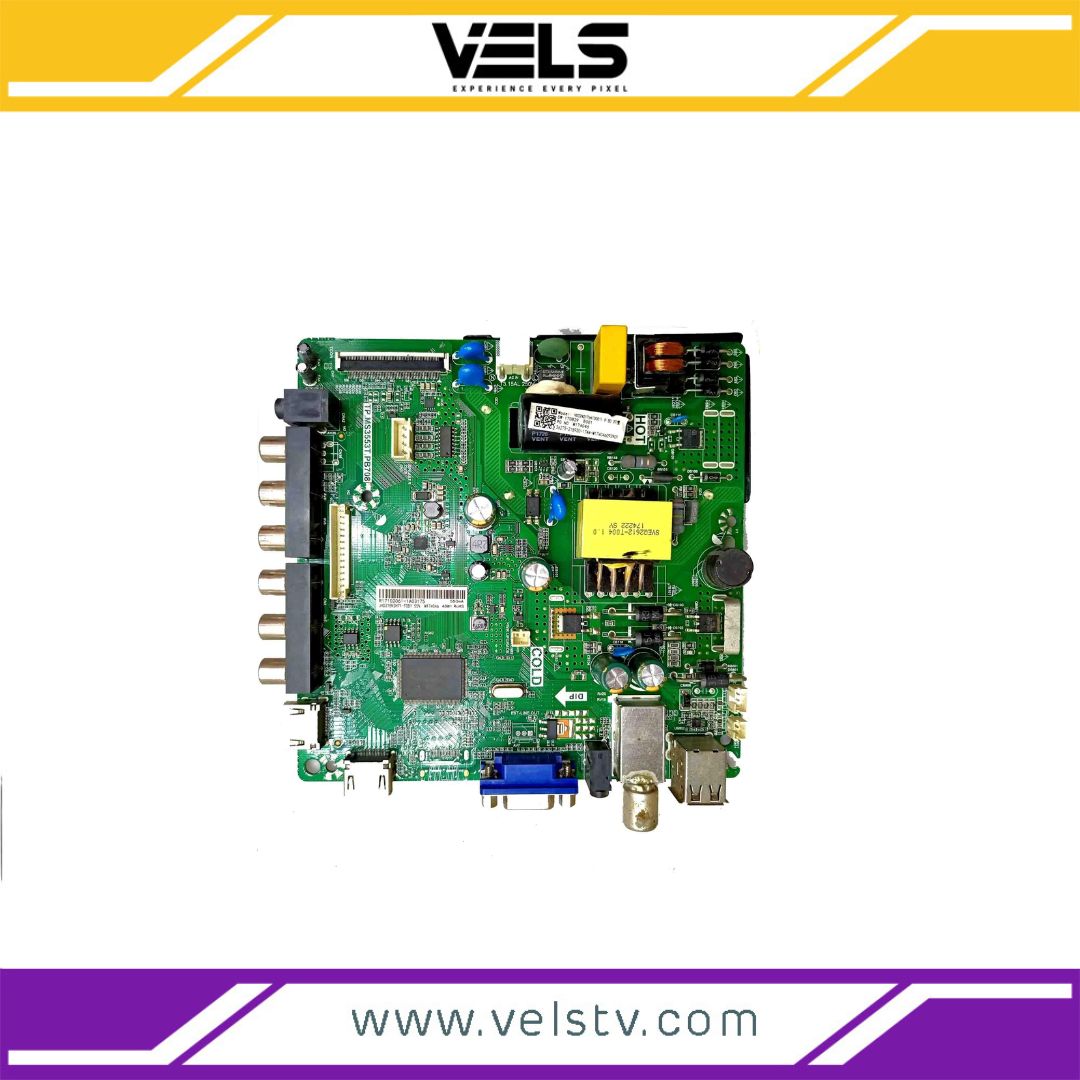
1 in stock
The Lloyd 32 L32N2 motherboard is a basic, entry-level motherboard designed for use in budget desktop computers. It typically features support for Intel or AMD processors, depending on the variant. The motherboard comes with a limited set of features, including a few RAM slots (usually DDR3 or DDR4), onboard graphics, and essential connectivity ports like USB, audio, and Ethernet.
It’s mainly intended for general computing tasks such as browsing, word processing, and media consumption, rather than high-performance gaming or heavy multitasking. It might have limited expansion options, with a couple of PCI slots or PCIe slots for additional cards like graphics or network adapters.
Since it’s an entry-level board, its build quality, performance, and upgrade options are generally constrained. You’d often find it in budget desktop systems or basic home PCs.
Tamilnadu No:1 online electronics product sales.
₹1,500.00 ₹3,000.00
1 in stock
Chipset:
The chipset determines how the processor, memory, and other peripherals communicate with each other. Common chipsets include Intel’s Z-series or AMD’s B-series.
Form Factor:
The form factor refers to the physical size and layout of the motherboard. Common ones are ATX, micro-ATX, and mini-ITX.
Processor Support (CPU Socket):
Motherboards support specific CPU types based on the socket type (e.g., LGA1151 for Intel or AM4 for AMD).
Memory (RAM) Slots:
The motherboard will indicate the supported types of RAM (e.g., DDR4 or DDR5) and the maximum capacity and speed.
Expansion Slots:
These include PCIe slots for things like graphics cards (GPU), network cards, or other expansion cards.
Storage:
SATA connectors for hard drives and SSDs, as well as M.2 slots for high-speed SSDs.
Integrated Graphics:
Some motherboards have integrated graphics if you don’t plan on using a dedicated GPU.
Ports and Connectivity:
A motherboard will typically have various I/O ports, including USB, Ethernet, audio, HDMI, and possibly newer standards like USB-C, Thunderbolt, etc.
Power Delivery and Cooling:
Power delivery mechanisms and thermal management options such as VRM (voltage regulator modules) and fan headers are crucial for stability.
BIOS or UEFI:
The BIOS/UEFI firmware allows you to configure hardware settings, boot devices, and tweak performance.
The Samsung UA32FH4003R motherboard (commonly identified as BN41-02156A or BN94-07223B) is the main electronic circuit board that controls all core functions of the Samsung 32-inch HD Ready LED TV. It manages video processing, audio output, input/output operations, and user interface control. Powered by the HyperReal Engine, it supports a 1366×768 resolution and provides clear, vibrant visuals with enhanced color and motion handling. The board includes essential connectivity options such as 2 HDMI ports, 1 USB port, component/composite input, RF antenna input, and headphone output, enabling seamless integration with set-top boxes, USB drives, and gaming consoles. It also supports Dolby Digital Plus and DTS Studio Sound technologies for a rich audio experience. The motherboard interfaces internally with the T-Con board, power supply, IR sensor, and speakers, ensuring synchronized operation of all hardware. As the central control unit of the TV, it plays a critical role in delivering both performance and reliability, and it is often replaced to resolve common faults like no display, signal failure, or non-responsive HDMI/USB ports.
The Lloyd 42″ L42HDG motherboard (model 5844‑A7M42G‑0PC0) is the original OEM mainboard designed specifically for Lloyd’s 42-inch HD‑Ready LED TVs. Fully tested and pre‑loaded with firmware, this plug‑and‑play board seamlessly manages video decoding (at 1366 × 768 resolution), stereo audio output, and all I/O operations including HDMI, USB, composite/component input, and RF antenna connection. Internally, it links to the panel via LVDS, integrates with the TV’s power supply, T‑Con, IR sensor, and front-panel controls, and is equipped to replace faulty boards suffering from issues like no display, unresponsive ports, or firmware failures. Supplied with a one-month warranty and installation support, this board restores full functionality to the L42HDG model.
The Samsung UA40D5000PM motherboard (main board), typically identified by part numbers BN94‑05221Q, BN94‑05221W, or BN94‑04470M, is the central control unit for Samsung’s 40″ Series 5 Full HD LED TV (model UA40D5000PM). It houses the HyperReal Engine and Clear Motion Rate 100 chipset to enhance picture clarity, color reproduction, and smoother motion; supports Dolby Digital Plus and SRS TheatreSound audio processing; and provides comprehensive connectivity with 4× HDMI 1.4 ports, 2× USB ports, component/composite inputs, PC VGA and audio input, Ethernet, optical digital audio out, and an RF tuner for multi-system reception (PAL/NTSC/SECAM). As the key interface between external devices, firmware, processing modules, and internal boards (T‑Con, power, LED driver), this OEM board is essential for restoring full AV functionality in case of failures such as no power, no signal, or port malfunction. A pre‑tested used unit (pulled from a working TV) typically sells for around USD 120 and comes with a limited warranty .
The Samsung UA43NU7100KXXL motherboard is a high-performance main board designed for Samsung’s 43-inch 4K UHD Smart LED TV from the NU7100 series. It supports ultra-high-definition video playback, smart features powered by Tizen OS, and seamless connectivity with HDMI, USB, and LAN ports. The board controls all functions of the TV including signal processing, smart features, and connectivity. Compatible with panel models like CY-GN043HGLV1H, this motherboard is essential for clear picture quality, fast interface response, and efficient power management.


Select at least 2 products
to compare


There are no reviews yet.